Last updated on September 21st, 2026 at 11:47 am
TL;DR: A SAFE (Simple Agreement for Future Equity) is a financing instrument, created by Y Combinator in 2013, that gives an investor the right to equity in the future when a triggering event occurs, typically a priced funding round, without setting a valuation today. It is not debt: no interest, no maturity date, no repayment obligation. This guide covers how a SAFE works, the terms that matter (valuation cap, discount rate, pro rata rights, MFN provisions), how it compares to a convertible note and a priced round, and how to structure a round well. It closes with a dedicated section on India, where a US-style SAFE is not directly usable and a different but equivalent instrument is required, and a look at how other major startup markets handle the same instrument.
Quick overview: A SAFE is popular because it is fast and defers the hardest conversation, what the company is worth, to a later date when there is more information to price it. This guide walks through the instrument itself: what it is, the terms you will actually negotiate, and how it compares to the alternatives. A dedicated section further down covers India specifically, and another covers how the picture looks in the US, UK, Singapore, and the EU.
What is a SAFE note?
A SAFE is an agreement between a company and an investor: the investor provides capital now, and in exchange receives the right to equity later, when a defined triggering event occurs, most commonly the company’s next priced equity round, an acquisition, or an IPO. Until that trigger, the SAFE sits on the company’s books without accruing interest and without a maturity date forcing a decision. When the trigger event happens, the SAFE converts into equity based on the terms agreed at the time of investment.
This is the core appeal: it lets a very early-stage company raise capital without agreeing a valuation prematurely, since setting a number for a company with no real track record is often more negotiation theatre than genuine pricing. Understanding what an investor agreement covers more broadly helps place the SAFE in context: it is one instrument in a wider toolkit of early-stage financing documents.
The key terms every SAFE contains
Valuation cap. The ceiling on the valuation used to convert the SAFE, regardless of how high the company is valued in the triggering round. A lower cap means the investor converts into more shares for the same investment; founders and investors negotiate this in opposite directions for exactly that reason.
Discount rate. A percentage reduction on the price per share the SAFE holder pays compared to new investors in the triggering round, typically 10 to 30%, with 20% common. Many SAFEs include both a cap and a discount, converting at whichever gives the investor more shares.
Pro rata rights. The right for the SAFE investor to participate in future financing rounds to maintain their ownership percentage, valuable to investors who want to keep backing a company they believe in, but a portion of future rounds that founders should weigh carefully before granting broadly.
Most Favoured Nation (MFN) provisions. If the company later issues a SAFE on better terms to a different investor, an MFN clause pulls those better terms back to the earlier investor. This sounds like a fairness mechanism, but it can cascade in ways founders do not always anticipate. Our detailed guide on how the MFN clause quietly reshapes SAFE and convertible note terms is worth reading before you agree to one.
Pre-money versus post-money. Y Combinator’s 2018 revision moved the standard SAFE from pre-money to post-money calculation. A post-money SAFE tells you immediately what percentage of the company you are selling; a pre-money SAFE leaves that uncertain until it interacts with every other SAFE and the terms of the eventual priced round. Post-money is now the market standard precisely because it removes that ambiguity.
SAFE vs convertible note vs priced round
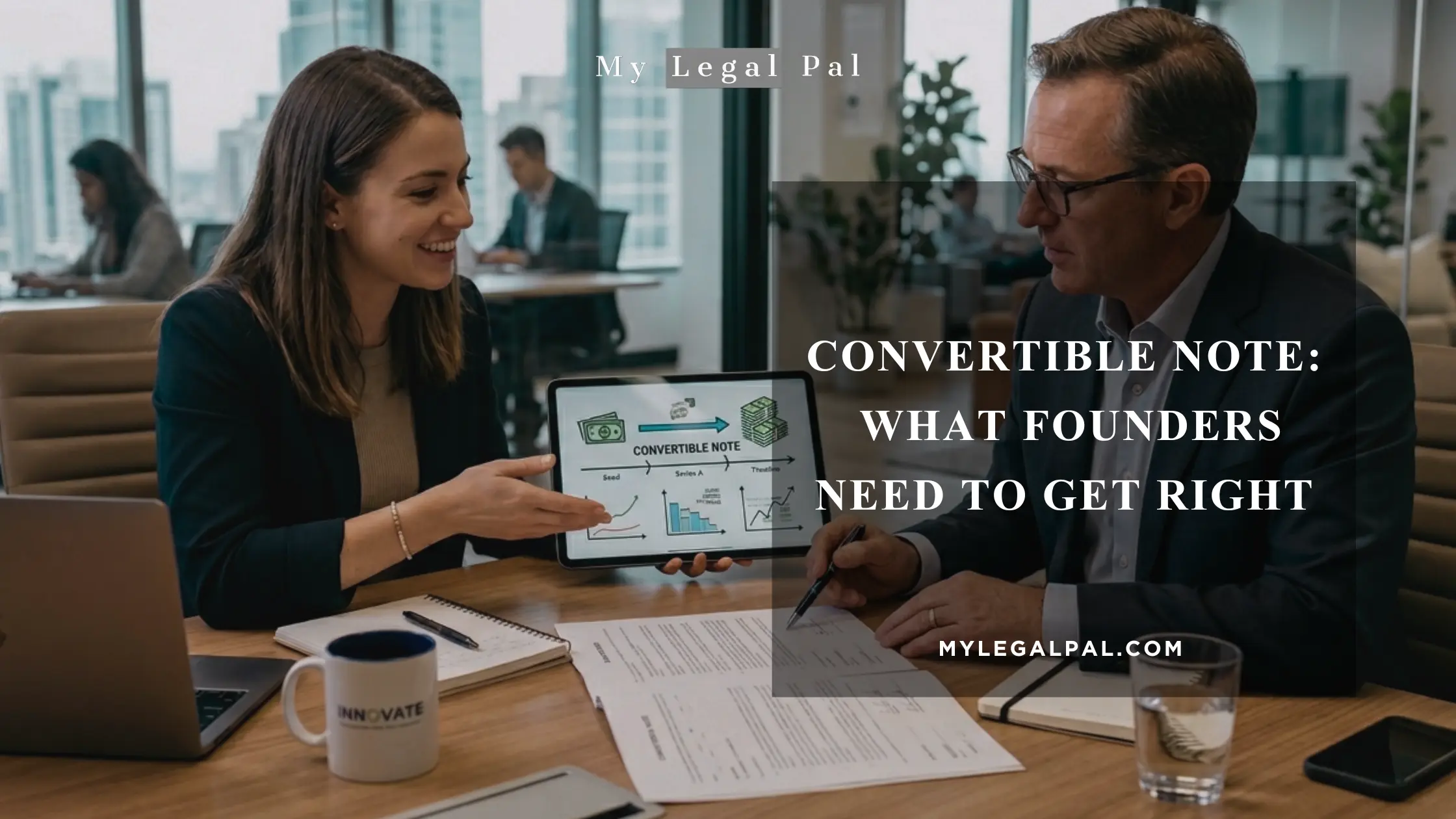
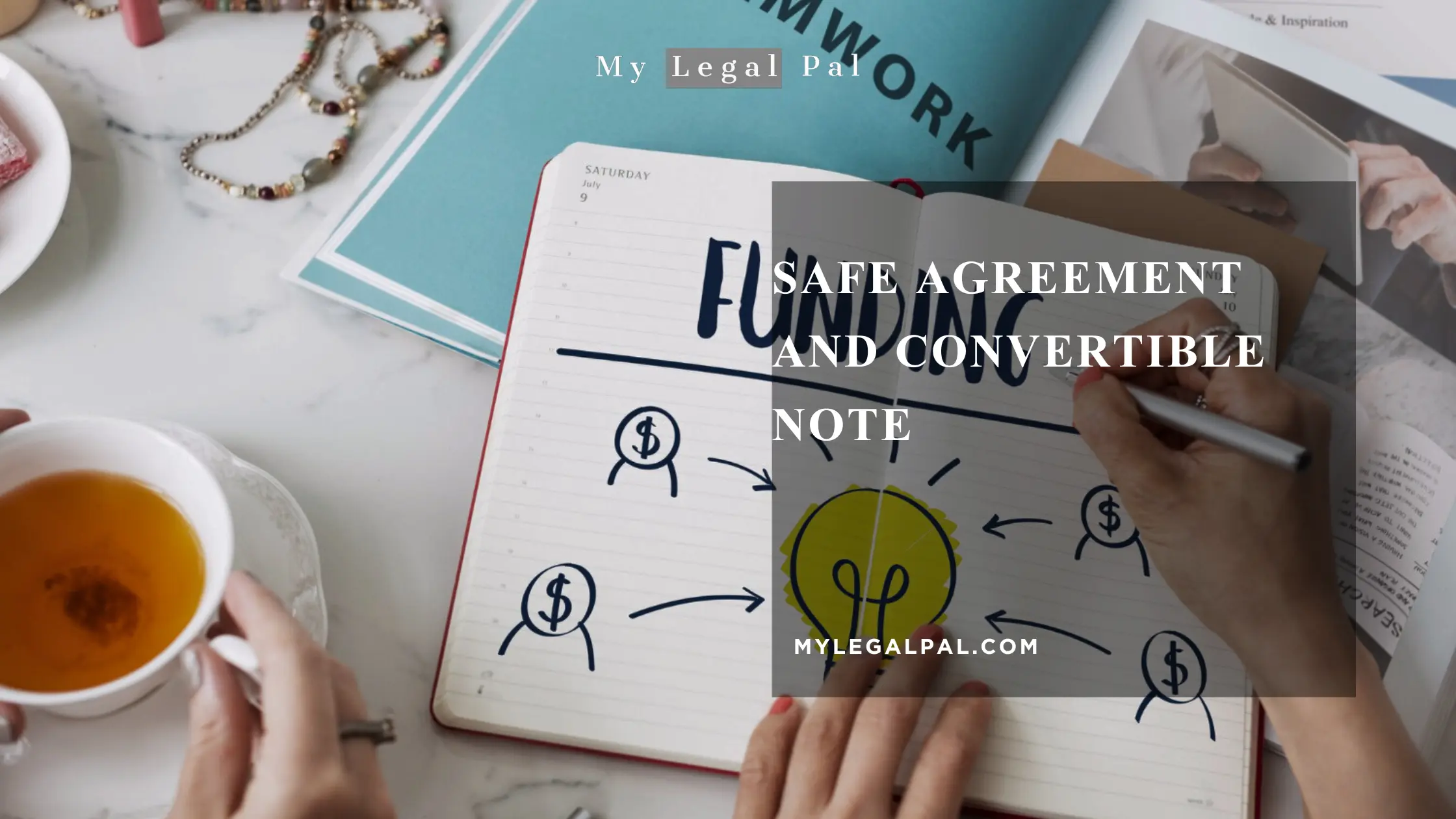
These three instruments solve the same basic problem, deferring or setting a valuation, in different ways, and choosing the right one matters. A SAFE is neither debt nor equity until conversion: no interest, no maturity date, minimal documentation. A convertible note is a debt instrument that converts to equity later, but unlike a SAFE it accrues interest and carries a maturity date, which forces a conversation if a priced round has not happened by then. A priced round sets an actual valuation today and issues equity immediately, with the most documentation, the highest legal cost, and immediate investor rights and protections. Our dedicated comparison of the SAFE agreement and convertible note goes deeper on this choice, and our guide on convertible note drafting covers what to get right if a note is the better fit for your round.
Why a US-style SAFE does not work in India
This is the single most important section for any founder or investor operating in India, and it is where most confusion, and most costly mistakes, occur.
A standard US-form SAFE is not a legally recognised instrument under Indian law. It does not fit the categories of security recognised under the Companies Act, 2013, and it is not a permitted instrument for foreign investment under FEMA. If a foreign investor tries to remit money against a plain SAFE, an authorised dealer bank has no recognised reporting mechanism to process it, and the transaction can be treated as a “Deposit” under company law, which is illegal for a private company to accept in this manner, or as an unreported FEMA transaction. Founders who use an off-the-shelf US SAFE template for an Indian company routinely discover this only at Series A, when a new investor’s due diligence flags an unresolved compliance gap, sometimes requiring RBI compounding, a process that can take three to six months and delays the round it was meant to speed up.
The market solution is the iSAFE. Indian startups and investors, notably through the 100X.VC template, developed the iSAFE (India SAFE) to replicate the commercial intent of a US SAFE, deferred valuation, a cap, a discount, within an instrument Indian law actually recognises. Structurally, an iSAFE is not a SAFE at all; it is Compulsorily Convertible Preference Shares (CCPS), governed by Sections 42, 55, and 62 of the Companies Act, 2013 and the Companies (Share Capital and Debentures) Rules, 2014. The word “compulsorily” is doing real work here: the shares must convert into equity and cannot be redeemed, because an optionally convertible instrument (OCPS or OCDs) is not a permitted instrument for standard foreign direct investment. CCPS, being compulsorily convertible, is treated as equity under FEMA, which is what makes foreign investment through this route workable.
Only a company can issue an iSAFE. Because CCPS is a share class, only an entity registered as a company under the Companies Act can issue one; an LLP or partnership cannot. This is one more reason choosing the right entity structure at incorporation matters before you plan to raise this way.
FEMA pricing discipline applies at conversion. For a foreign investor, the price at which CCPS converts cannot fall below the fair market value at the time the CCPS was issued. A valuation cap set carelessly low relative to that FMV can mean the cap-implied conversion price breaches FEMA’s pricing rules at Series A, forcing a renegotiation or restructuring of the entire instrument before the round can close. This is a common, avoidable mistake: founders treat the cap as a purely commercial number without running the FEMA pricing test against it.
The alternative: Convertible Notes, for DPIIT-recognised startups. India also has a genuinely recognised Convertible Note instrument, but access is gated: only a startup with DPIIT recognition can issue one, to resident or non-resident investors, with a minimum investment of Rs 25 lakh per investor and a maximum tenor of 10 years. For foreign investors, issuance and any subsequent transfer require RBI reporting (Form CN) within 30 days. A startup without DPIIT recognition cannot use this route at all, for any investor, and must rely on CCPS or a full priced round instead.
What this means practically. If you are raising for an Indian company, do not simply download a Y Combinator SAFE template and use it as-is. Decide, with proper advice, whether an iSAFE (CCPS) or a Convertible Note is the right structure for your round, confirm your DPIIT status if a Convertible Note is in play, and have the valuation cap checked against FEMA pricing rules before you finalise terms, not after a foreign investor’s counsel flags it. Our investor agreement guide and our term sheet negotiation guide cover the surrounding negotiation, and reviewing what you are about to sign before you sign it is exactly what our SAFE note review guide is built for.
How SAFEs and their equivalents work in other countries
The US instrument is not universal, and founders raising across borders should know the local picture before assuming portability.
United States. The native home of the SAFE, and the Y Combinator post-money SAFE is the de facto market standard for pre-seed and seed rounds, widely accepted by angels and early-stage funds. Our contract lawyers in the USA advise on US SAFE and convertible note structuring.
United Kingdom. SAFEs are used but less universally than in the US; UK early-stage investors more often use Advance Subscription Agreements (ASAs), a broadly similar deferred-equity instrument shaped to satisfy UK tax-relief schemes like SEIS and EIS, which many UK angel investors rely on and which a straight US-style SAFE does not accommodate. Our contract lawyers in London advise on the UK equivalent structures.
Singapore. SAFEs, including local adaptations sometimes called SAFEs or convertible instruments aligned to Singapore company law, are used across its active startup and venture ecosystem, generally with fewer of the structural obstacles India faces, since Singapore’s companies and foreign exchange framework accommodates the instrument more directly. Our contract lawyers in Singapore advise on Singapore-governed SAFEs.
European Union. No single EU-wide instrument; national company law varies significantly, and some jurisdictions (Germany and France among them) have developed their own convertible-instrument templates because a plain US SAFE does not map cleanly onto their capital and share-class rules, similar in spirit to India’s iSAFE solution though built around different local requirements. Our contract lawyers in the EU advise on the relevant national adaptation.
The pattern worth remembering: the SAFE’s commercial logic, deferred valuation now, equity later, travels well. The legal wrapper around it does not automatically travel, and every jurisdiction outside the US requires checking whether a plain SAFE fits the local company and securities law, or whether, as in India, a structurally different but commercially equivalent instrument is needed instead.
Structuring your round: what to get right regardless of jurisdiction
A few disciplines apply everywhere, US, India, or elsewhere.
Set the valuation cap deliberately, informed by your traction, comparable rounds, and where you realistically expect to land at your next priced round, not as a placeholder number. Track every instrument you issue on a live cap table with fully diluted ownership, since multiple instruments at different caps compound in ways that are easy to lose track of and hard to unwind later. Be deliberate about pro rata and MFN grants, since both create obligations that outlast the immediate round. Get the paperwork and approvals right the first time: board approval, the correct securities filings for your jurisdiction, and clean documentation, because the cost of fixing a defective instrument at your next round is always higher than the cost of doing it properly now. If your instrument grants information or board rights, make sure they are consistent with what you have already promised elsewhere, including in your founders’ agreement and any existing shareholders’ agreement, particularly around drag-along and tag-along rights that a new investor round can interact with. And know in advance what happens to unvested and vested equity if a co-founder leaves before a new investor’s diligence surfaces an unresolved leaver scenario. Our broader guide on the startup agreements investors actually read before funding you covers the surrounding documentation a clean round depends on.
Frequently asked questions
What is a SAFE note?
A SAFE (Simple Agreement for Future Equity) is a financing instrument created by Y Combinator in 2013 that gives an investor the right to receive equity in the future, when a defined triggering event occurs, typically the company’s next priced funding round, an acquisition, or an IPO, in exchange for capital provided today. It is not debt: there is no interest and no maturity date, and it lets an early-stage company raise money without setting a valuation immediately.
What is the difference between a SAFE and a convertible note?
A SAFE is neither debt nor equity and has no maturity date; a convertible note is debt that accrues interest and matures. For the full comparison including conversion mechanics, see our comprehensive article on SAFE Agreement and Convertible Note guide.
What is a valuation cap in a SAFE?
A valuation cap sets the maximum valuation used to convert the SAFE into equity, regardless of how high the company is actually valued in the triggering round. A lower cap means the investor converts into more shares for the same investment, which is why founders and investors negotiate this figure in opposite directions.
Are SAFE notes legal in India?
A standard US-form SAFE is not a legally recognised instrument under Indian company law or FEMA, and using one incorrectly can be treated as an illegal deposit or an unreported foreign exchange transaction. Indian startups instead use the iSAFE, which replicates the commercial terms of a SAFE (a valuation cap, a discount) but is structured as Compulsorily Convertible Preference Shares (CCPS) under the Companies Act, 2013, which is a recognised instrument for both resident and, where compulsorily convertible, foreign investment.
What is the difference between an iSAFE and a US SAFE?
A US SAFE is a simple contract that converts directly to equity on a trigger event, with no share class issued at signing. An iSAFE achieves the same commercial outcome but does so by issuing Compulsorily Convertible Preference Shares (CCPS) at the time of investment, which then convert into equity shares on the triggering event. The CCPS structure exists because Indian company law and FEMA do not recognise a bare contractual right to future equity the way US securities law does; only a company, not an LLP, can issue CCPS.
Do foreign investors face extra requirements when investing in Indian startups through SAFEs or convertible instruments?
Yes. Foreign investment must go through an instrument FEMA recognises as equity, such as Compulsorily Convertible Preference Shares, not an optionally convertible instrument or a bare contractual SAFE. Conversion pricing must comply with FEMA’s fair-market-value rules, and the relevant filings, such as Form FC-GPR for share allotments or Form CN for Convertible Notes, must be made within the prescribed timelines. Getting this structuring wrong is a common source of compliance gaps discovered during a later funding round’s due diligence.
Authored and reviewed by Prakhar Rai, Advocate, founder of My Legal Pal. Prakhar is enrolled with the Bar Council of India and has over ten years of experience advising founders and investors on early-stage funding instruments, cap tables, and cross-border investment structuring. He is an alumnus of the National Law School of India University, Bangalore, where he completed his Master of Business Laws, and of La Martiniere. Connect on LinkedIn.
This article is general information, not legal or tax advice. Structuring SAFEs, iSAFEs, and convertible instruments involves securities, company, and foreign exchange law that varies by jurisdiction and changes. For advice on your own round, speak to a qualified lawyer.
If you are raising or structuring an early-stage round, our team can help get the instrument right the first time. We handle contract drafting and contract review and revision for SAFEs, iSAFEs, and convertible notes, and you can speak to our contract lawyers in India or the jurisdiction that governs your round. For a full breakdown of iSAFE, CCPS, CCD, and genuine convertible notes side by side, see iSAFE vs CCPS vs CCD in India.