

TL;DR: A warranty deed is the seller’s legal promise that they actually own the property they are selling you, that the title is free of hidden problems, and that they will defend your ownership if a claim surfaces later. Not every deed makes that promise. A general warranty deed covers the property’s entire history; a […]
Category Archives: Contracts & Agreements
19
Jul
Jul
TL;DR: Contract review is the systematic process of examining every clause in an agreement before you sign it, covering scope, payment, liability, termination, and dispute resolution. Most costly contract mistakes come from skipping this process under time pressure, not from genuinely complex legal language. High-stakes agreements, partnerships, major vendor deals, employment contracts for key staff, […]

15
Jul
Jul
TL;DR: A contract does not become enforceable just because both parties signed it. US courts look for four specific elements, offer and acceptance, consideration, capacity, and legality, and even where those are present, ambiguous language, one-sided terms, or a missing written record can still sink an otherwise valid agreement. This guide covers what American courts […]

12
Jul
Jul
TL;DR: You signed up for what looked like a trial or a simple service, and now you are staring at a contract that claims you owe thousands of dollars with “no cancellation under any circumstances” printed across it. Take a breath: that language is designed to intimidate you into paying, and in most countries it […]

10
Jul
Jul
TL;DR: This is not another explainer on what a contract is or what clauses to include, those are covered in depth in our guides on what makes an agreement legally binding and what should be included in every business contract. This is a working list of practical tips for small business owners who already have […]
02
Jul
Jul
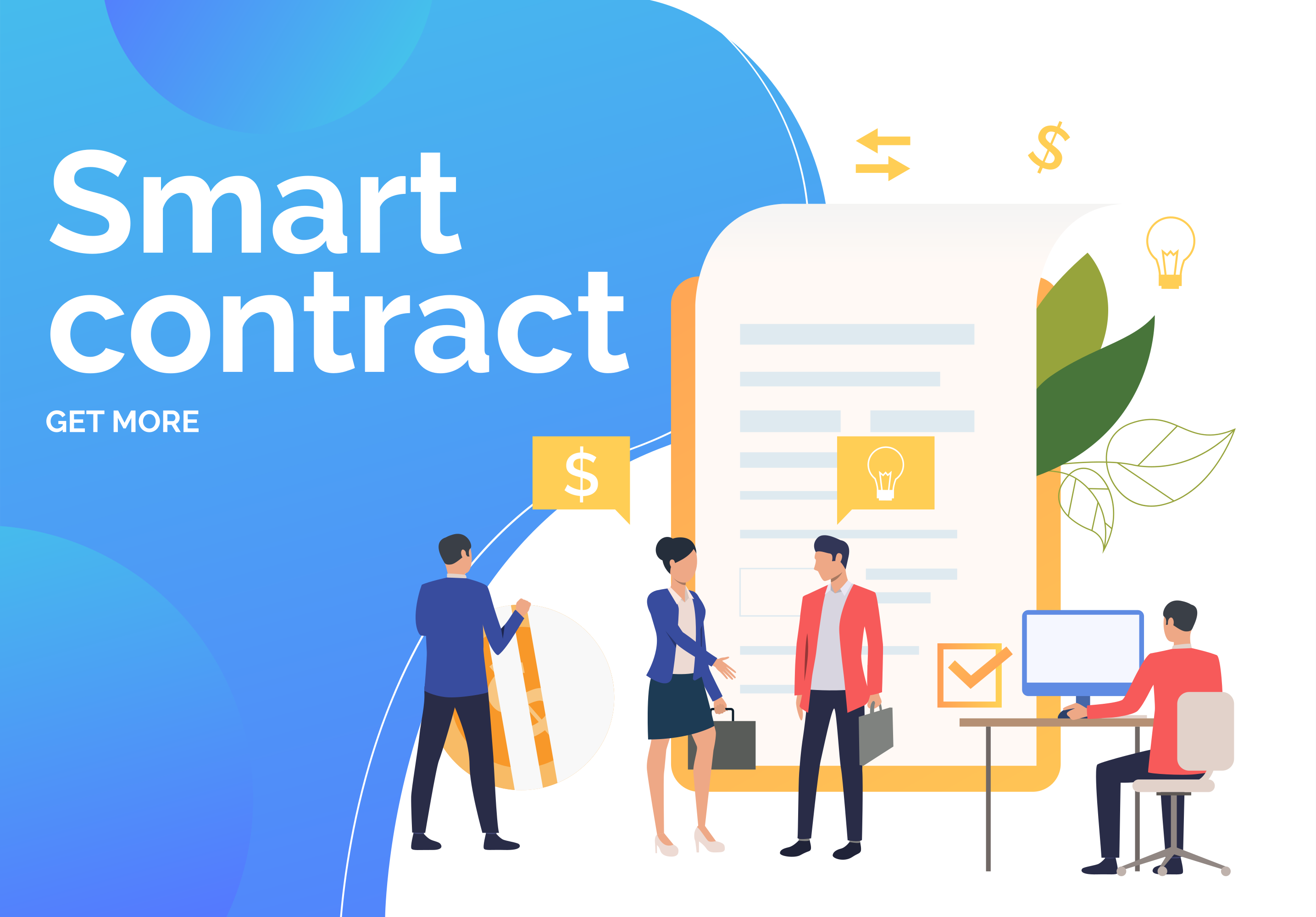
TL;DR: A smart contract is self-executing code on a blockchain that automatically carries out agreed actions once predetermined conditions are met, releasing payment on delivery confirmation, for example, without further human intervention. The useful answer to whether they are legally enforceable is not a simple yes or no; it is that a smart contract can […]

04
Apr
Apr
TL;DR: A SAFE (Simple Agreement for Future Equity) is a financing instrument, created by Y Combinator in 2013, that gives an investor the right to equity in the future when a triggering event occurs, typically a priced funding round, without setting a valuation today. It is not debt: no interest, no maturity date, no repayment […]

21
Nov
Nov
At a Glance Most business disputes do not begin because one party intended to act dishonestly. They usually begin because the contract failed to clearly define expectations, ownership, liability, timelines, payment obligations, or exit rights. A poorly drafted agreement can create uncertainty that becomes expensive once money, intellectual property, investors, or commercial relationships are involved. […]
16
Sep
Sep
TL;DR: A non-disclosure agreement (NDA) is a legally binding contract that obligates one or more parties to keep specified information secret. It is the standard first document signed before sharing anything sensitive, business plans, source code, financials, customer data, trade secrets, or strategic roadmaps. There are three main structures: unilateral (one party discloses), mutual (both […]
13
Sep
Sep
TL;DR: A prenuptial agreement is a contract signed before marriage that sets out how assets, debts, and spousal support will be handled if the marriage ends. It is fully enforceable in countries like the US, UK, Australia, and most of Europe when properly drafted, but its legal status is genuinely uncertain in India, where it […]