
TL;DR: In most of the world, a verbal agreement can be just as legally binding as a written one, provided it has the basic ingredients of a contract, offer, acceptance, consideration, and an intention to be legally bound. The real risk with a verbal agreement was never enforceability in principle. It is proof in practice, […]
Tag Archives: Agreement

07
Aug
Aug
TL;DR: A loan agreement is a contract that sets out the terms on which one party lends money to another: the amount, the interest, the repayment schedule, the security, and what happens on default. For borrowers, the agreement is not just paperwork, it defines exactly what you owe, when, and what the lender can do […]
14
Apr
Apr
Most startups don’t fall apart because of bad products or a tough market. They fall apart because two people who started as friends, colleagues, or classmates never had a real conversation about what happens when things get complicated. At My Legal Pal, our lawyers have reviewed hundreds of founder disputes, and almost every single one […]
15
Mar
Mar
TL;DR: An API licensing agreement governs the terms under which one party, the API provider, grants another, the API consumer, permission to access and use its application programming interface. It looks similar to a traditional software licence on the surface but functions very differently: you’re licensing ongoing access to a live, changeable service, not a […]
08
Mar
Mar
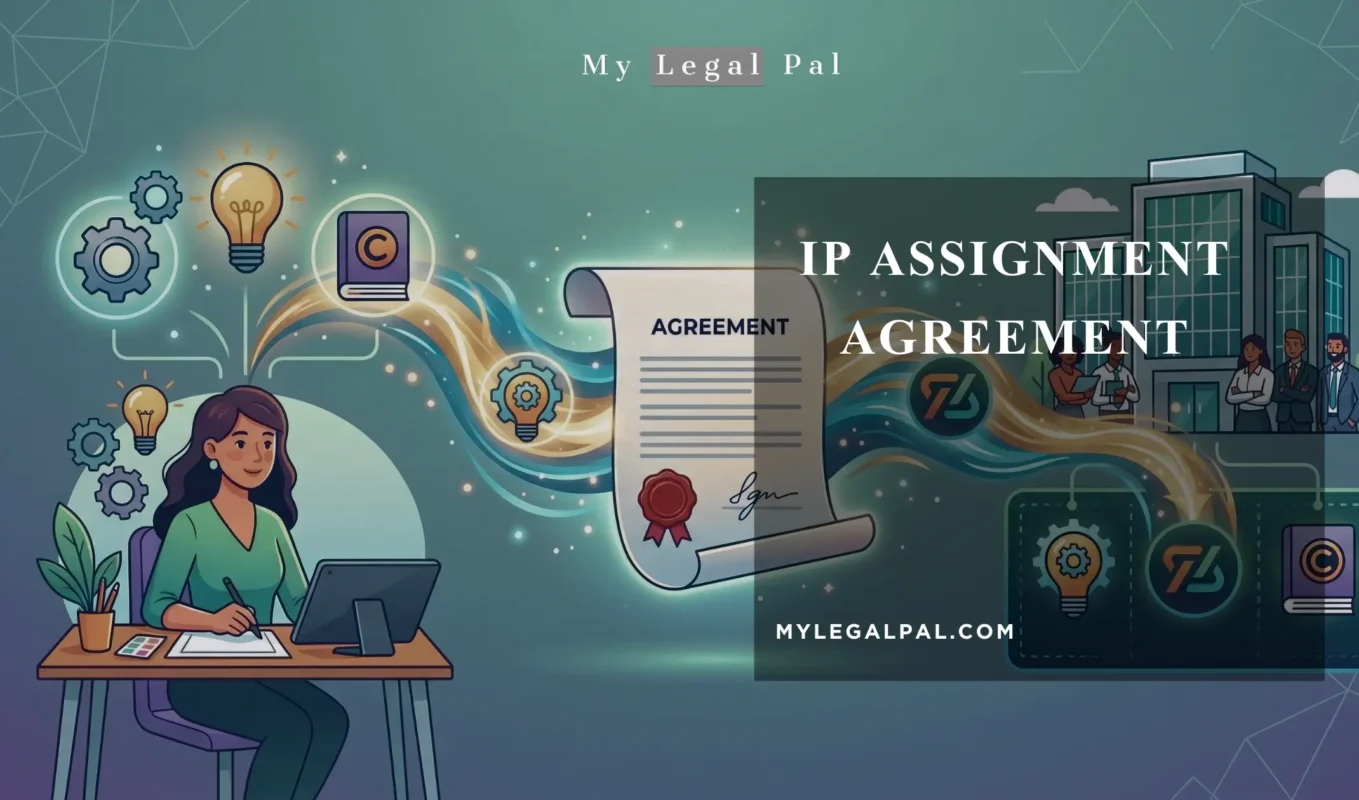
TL;DR: An IP assignment agreement transfers ownership of intellectual property, code, designs, content, inventions, from the person or entity who created it to another party, permanently and completely. Without one, the creator, not the business paying for the work, may legally own it. This is one of the most consistently damaging gaps discovered during investor […]
24
Feb
Feb
TL;DR: A shareholders’ agreement earns its value the day shareholders disagree, not the day it’s signed. The provisions that matter most in practice are the ones most founders skip in the excitement of starting a business: how decisions actually get made, what happens when two equal shareholders reach a genuine deadlock, who has first right […]
23
Feb
Feb
TL;DR: A SAFE and a convertible note both let an early-stage company raise money without setting a valuation today, but they are structurally different instruments. A SAFE is not debt: no interest, no maturity date, no repayment obligation. A convertible note is a debt instrument: it accrues interest and carries a maturity date that forces […]
16
Nov
Nov
TL;DR: A shareholders’ agreement and your company’s Articles of Association do different jobs, and confusing them is the single most common drafting mistake. The Articles are a public, statutory document filed with the Registrar of Companies, governed by the Companies Act, 2013, and legally binding on the company itself. A shareholders’ agreement is a private […]
15
Nov
Nov
TL;DR: A founder agreement needs to answer six questions precisely, not generally: who owns what percentage and how that changes with future funding, how equity is earned over time rather than granted outright, what each founder’s role and decision-making authority actually is, what happens if a founder leaves voluntarily or is removed, how IP created […]

22
Sep
Sep
TL;DR: A contract lawyer who has never worked on an AI or technology deal can still draft a competent, enforceable agreement, but competent is not the same as adequate here. AI and tech contracts raise a specific set of questions, who owns AI training data and outputs, who is liable when an algorithm makes a […]