
TL;DR: Being accused of breach of contract is not the same as having actually breached one. A genuine defense may fully apply, the accusation may be a pressure tactic, or the real issue may be a dispute the other party is dressing up as breach. What you do in the first few days after the […]
Category Archives: Contracts & Agreements

17
Aug
Aug
TL;DR: Argentina is a civil-law country, and its private law runs through one unified code, the Código Civil y Comercial de la Nación (CCCN), not a patchwork of common-law precedent. A contract that would hold up perfectly well in New York or London can still fail under Argentine law if it ignores form requirements, currency […]

07
Aug
Aug
TL;DR: A loan agreement is a contract that sets out the terms on which one party lends money to another: the amount, the interest, the repayment schedule, the security, and what happens on default. For borrowers, the agreement is not just paperwork, it defines exactly what you owe, when, and what the lender can do […]
TL;DR: An ESOP (Employee Stock Option Plan) gives employees the right to buy shares in their company at a fixed price after a vesting period, letting them share in the company’s growth. In India, ESOPs are governed by Section 62(1)(b) of the Companies Act, 2013 and require a special resolution of shareholders, not just a […]
TL;DR: Yes. A contract in India is legally valid even if it is not on stamp paper. Stamping is a tax requirement, not a condition of validity. A contract’s validity depends on the Indian Contract Act, 1872, offer, acceptance, consideration, free consent, competent parties, and a lawful object, none of which mention stamp paper. What […]
TL;DR: A supercap or supermajority clause is a second, higher liability ceiling that sits above your general cap but below unlimited liability, and it applies only to named high-risk categories such as data breaches, confidentiality, and IP indemnities. It is usually set as a multiple of fees (2x or 3x is common) or a fixed […]

10
Jul
Jul
TL;DR: A Statement of Work (SOW) is the document that defines the specific work to be done, the deliverables, timeline, and price, for a particular project or engagement. It usually sits underneath a Master Service Agreement (MSA), which sets the overarching legal terms that apply across every project. The MSA handles the “how we work […]
30
May
May
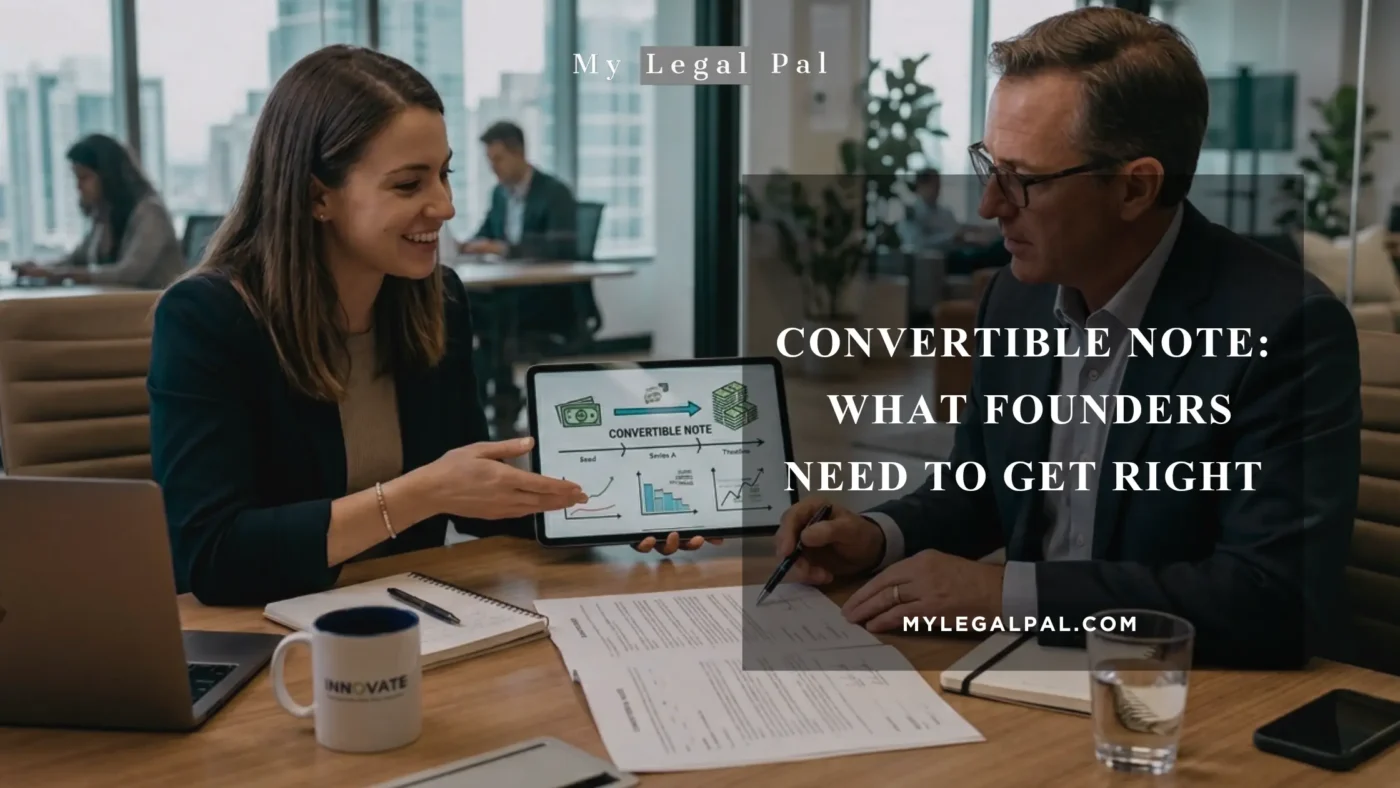
TL;DR: A convertible note is a short-term loan that converts into equity when your next round triggers it. Convertible note agreement drafting decides the principal, the interest, the maturity date, the valuation cap, the discount, and the conversion triggers. These clauses control your dilution and your risk. Quick overview: This guide walks through what a […]

28
May
May
Quick overview: A SAFE looks like a two-page formality. It behaves like a long-term ownership decision. This guide covers exactly what a SAFE note review checks, the valuation cap divide that has opened up between AI and non-AI startups this year, why India requires an entirely different instrument than the US template, and what a […]

23
May
May
A force majeure clause is the part of a contract that excuses one or both parties from performing their obligations when something genuinely outside their control makes performance impossible, illegal, or impractical. The phrase is French for “superior force.” In plain terms, it is the clause that answers the question: what happens if neither of […]