Last updated on August 9th, 2026 at 06:51 am
TL;DR: Paying for creative work does not automatically make you the owner of it. In the US, “work for hire” only applies to employees acting within their job, or to independent contractors whose work falls into one of nine narrow statutory categories, with a signed written agreement. Outside those categories, an independent contractor keeps copyright in what they create unless they sign a separate IP assignment. India has no general work-for-hire doctrine at all, only a few narrow exceptions, so the default position for most commissioned work is the same: the creator owns it until they assign it away in writing.
Quick overview: This guide explains what work for hire actually requires under US copyright law, why most independent contractor relationships do not qualify for it, what an IP assignment clause needs to say to actually work, how the position differs in the UK, Australia, and India, and the practical questions to ask before you sign anything.
Here is the assumption that causes more disputes than almost any other in business contracting: that paying someone for creative or technical work automatically makes you the owner of it. It does not. Ownership of a logo, a piece of software, a set of marketing materials, or a written report depends entirely on the legal structure of the relationship that produced it, and on whether the right words appear in a written contract. Get this wrong, and the thing you paid thousands of dollars for might still legally belong to someone else.
What “Work for Hire” Actually Requires
Work for hire is a specific legal doctrine, not a phrase you can simply write into a contract and expect to work. In the United States, it is governed by 17 U.S.C. §101 of the Copyright Act, and it applies in only two situations.
The first is straightforward: when the creator is an employee and the work falls within the scope of their regular job duties, the employer owns the copyright automatically, without needing a separate agreement. The second is far narrower than most people assume: when the work is specially commissioned from an independent contractor and falls into one of nine specific statutory categories, contributions to a collective work, parts of a motion picture or audiovisual work, translations, supplementary works, compilations, instructional texts, tests and answer materials, atlases, and sound recordings. If the work does not fall into one of these categories, it cannot be work for hire under US law, no matter what the contract calls it, and there must additionally be a signed written agreement explicitly stating that the parties intend the work to be treated as work for hire.
This is the trap that catches businesses constantly. Hiring a freelance copywriter to write website content, a designer to build a logo, or a consultant to write a strategy report, none of these fall into the nine categories. Labelling that contract “work for hire” does not change the legal outcome. The writer or designer keeps the copyright by default, regardless of what the contract title says, unless there is a separate, properly drafted assignment.
Independent Contractor Agreements: The More Common Reality
Most commissioned work in business does not qualify as work for hire at all. It falls under a regular independent contractor relationship, where the contractor performs specific tasks or delivers specific results, but ownership of the underlying intellectual property does not transfer automatically just because money changed hands.
The default legal position, in the US and in most other jurisdictions, is that the creator retains ownership of what they create unless they explicitly agree to transfer it. This means a client who pays a contractor in full and receives the deliverables may, in the absence of an assignment, only hold a licence to use the work, not actual ownership of it. That licence might be broad enough for everyday purposes, but it generally will not extend to modifying the underlying work, sublicensing it, or stopping the original creator from reusing it elsewhere.
A pattern we see: A company engages a developer to build their core product, with a contract that covers payment, deadlines, and deliverables but says nothing explicit about IP ownership. Months later they need a second developer to extend the codebase, and the new developer discovers the underlying code includes components the original developer considers their own reusable framework, used across multiple clients. The company assumed full ownership because they paid in full and received the working app. What they actually held, in the absence of an assignment, was closer to a licence to use what they were given, not the broader rights they thought came with payment.
What an IP Assignment Clause Actually Needs to Say
The fix for this gap is a properly drafted IP assignment clause, and the specific wording matters more than people expect. An assignment needs to use present-tense, operative language, something close to “Contractor hereby assigns to Client all right, title, and interest in and to any work product created under this Agreement, including all intellectual property rights therein, including but not limited to copyrights, trademarks, and trade secrets.” Language that merely promises a future assignment, rather than operating immediately, can create unnecessary ambiguity about whether the transfer has actually happened.
Beyond the assignment itself, the scope of services needs to be specific enough to prevent disputes about what was actually covered, ideally specifying deliverables, formats, and the number of revision rounds, rather than vague descriptions that two parties can later interpret completely differently. Tying final payment to both deliverable acceptance and execution of the assignment paperwork is also a sensible practical safeguard, since it gives both sides a clear, simultaneous moment where money and ownership change hands together.
How This Differs Across Borders
The default ownership rules in this area are not the same everywhere, which creates real complications for any cross-border engagement.
In the United States, the work-for-hire framework above applies, and outside the nine statutory categories, contractors retain ownership absent a written assignment. In the United Kingdom, the equivalent question turns on whether work was created under a “contract of service” (employment) or a “contract for services” (contracting), and unlike the US, current UK law gives the commissioning party no automatic ownership in most commissioned works at all, only the creator’s first ownership, plus a possible implied licence for the purpose the work was commissioned for. The UK also carries stronger moral rights protections than the US, the creator’s right to be identified and to object to derogatory treatment of their work, rights that often survive even after copyright itself is assigned. In Australia, the position broadly mirrors the UK and US default, employer owns work created in the course of employment, contractor owns their own work absent assignment, and moral rights specifically cannot be assigned away, only waived.
Independent Contractor IP Ownership in India: A Genuinely Different Default
This is the part most global guides on this topic skip entirely, and it is worth understanding properly if any part of your contracting relationship touches India. India does not have a general work-for-hire doctrine at all. Ownership instead runs through Section 17 of the Copyright Act, 1957, and the exceptions to author ownership it sets out are narrow and specific, not a broad commissioning rule like the US framework.
Under Section 17, an employer automatically owns copyright in work created by an employee in the course of employment under a contract of service, in the absence of a contrary agreement. A separate, narrower provision in Section 17 deals specifically with photographs, paintings, portraits, engravings, and cinematograph films made for valuable consideration at someone’s instance, where the commissioning party becomes the first owner. Outside these specific categories, the rule is the same one that trips up businesses everywhere else: in the absence of a written assignment, the independent contractor remains the first owner of the copyright. As one detailed legal analysis puts it plainly, unless the copyright is expressly assigned in writing, commissioning a freelance writer or a software developer does not make the commissioner the automatic owner, and the specific categories listed in the Act are exhaustive, not illustrative.
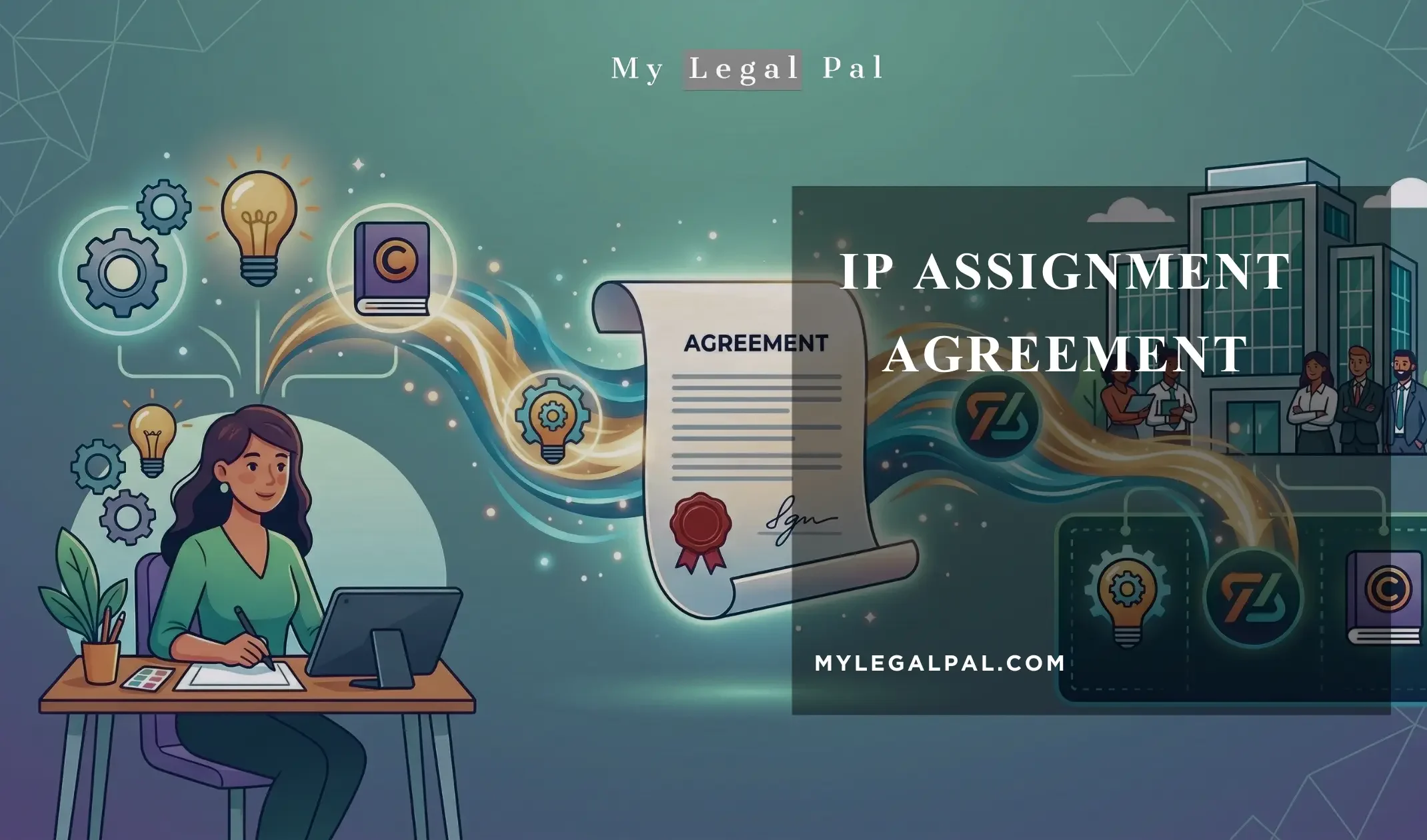
In practice, this means a company in India that commissions a logo, a piece of software, or written content from a freelancer owns nothing in that work by default, exactly the same trap as the US work-for-hire myth, just arrived at through a different statute. The fix is identical: a written IP assignment clause, drafted clearly, signed before or alongside the engagement. Our IP assignment agreement guide covers exactly what that document needs to contain, and our piece on why startups lose ownership of their own product explains how often this exact gap surfaces during fundraising due diligence.
The Questions Worth Asking Before You Sign Anything
A short, honest checklist resolves most of the risk here before it becomes a dispute. Does the work genuinely fall into a statutory work-for-hire category, or are you assuming it does based on the contract’s title? Is there explicit, present-tense written assignment language, not just a label? What rights are you actually receiving, full ownership, a broad licence, or something narrower than you assumed? Can the creator legally reuse this work elsewhere, including with your competitors? What happens if you need someone else to modify or extend the work later? And which country’s law actually governs the agreement, since, as the comparison above shows, the answer to almost every other question changes depending on it.
Conclusion
The gap between “I paid for it” and “I own it” is one of the most expensive misunderstandings in commercial contracting, and it is entirely preventable. Three things are worth holding onto. First, work for hire is a narrow legal doctrine with specific statutory requirements, not a label you can apply to any contract and expect to work. Second, the default position almost everywhere, the US, the UK, Australia, and India, is that the creator owns what they create unless a written assignment says otherwise, which means silence in your contract almost always favours the contractor, not the client. Third, the specific wording of an assignment clause, and the jurisdiction governing it, decide whether you actually own what you think you paid for.
If you are commissioning work from a contractor, freelancer, or agency, anywhere in the world, get the IP assignment drafted properly before the work begins, not after a dispute makes you wish you had. My Legal Pal drafts and reviews IP assignment clauses, work-for-hire agreements, and independent contractor contracts for businesses operating across the US, UK, Australia, India, and beyond. Visit MyLegalPal.com to get your contractor agreements reviewed or drafted by expert contract lawyers.
My Legal Pal. Making Legal Simple.
Frequently Asked Questions
What is the difference between work for hire and an independent contractor agreement?
Work for hire is a specific legal doctrine under US copyright law that gives the commissioning party automatic ownership, but only for employees acting within their job, or for contractors whose work falls into one of nine narrow statutory categories with a signed written agreement. An independent contractor agreement is the more general business relationship for commissioned work, and it does not transfer IP ownership automatically at all, the contractor keeps it unless they sign a separate assignment.
Does paying for work automatically make me the owner of it?
No. This is the single most common and most expensive misconception in contracting. Payment generally purchases the service performed and, at most, an implied licence to use the result for the purpose it was commissioned for. Full legal ownership of the underlying intellectual property requires an explicit written assignment, separate from the payment itself, in nearly every jurisdiction that has been examined on this question.
Does labelling a contract “work for hire” make it legally valid?
No. The label has no legal effect on its own. Under US law, the work must actually fall into one of the nine statutory categories for an independent contractor’s output to qualify as work for hire, regardless of what the contract calls it. If the work does not fall into one of those categories, and the creator is not an employee, the contractor retains copyright even if the contract is titled “Work for Hire.”
Is there a work-for-hire doctrine in India?
Not a general one. India’s Copyright Act, 1957 gives automatic employer ownership only for work created by employees in the course of employment, and a narrow separate rule for certain commissioned photographs, paintings, and films made for valuable consideration. Outside those specific categories, an independent contractor in India retains copyright in what they create by default, unless they sign a written assignment, the same underlying gap that catches businesses in the US, just reached through a different statute.
What should an IP assignment clause actually include?
A properly drafted assignment clause should use present-tense, operative language stating that the contractor hereby assigns all right, title, and interest in the work product, including copyrights and other intellectual property rights, to the client. It should be paired with a clearly defined scope of work, so there is no ambiguity about what is actually covered, and ideally tied to the payment schedule so ownership and final payment transfer together rather than at separate, disputed moments.
Can a contractor reuse work they created for a client if there is no IP assignment?
In most cases, yes, if there is no written assignment, the contractor retains ownership and can generally reuse their own underlying work elsewhere, including for a competing client, unless the contract specifically restricts that through confidentiality or non-compete provisions. This is precisely why relying on payment alone, without an explicit assignment, leaves a client far more exposed than most assume.
Written by Prakhar Rai
Prakhar Rai is the founder of My Legal Pal and a licensed attorney. He started the practice after watching businesses that operate across borders get legal advice in fragments: a clause here, a reaction to a problem there, with no one looking at the whole picture or thinking a few steps ahead. With more than a decade in business and corporate advisory, he came to a simple view. As companies started running on cross-border deals, digital platforms and overlapping regulation, they needed legal strategy built around how they actually work, not just documents drafted after the fact. My Legal Pal is built on that idea: foresight and clarity first, paperwork second. He studied at La Martiniere College, holds an LL.B, and earned a Master of Business Laws from the National Law School of India University, Bangalore, specialising in corporate, banking, intellectual property, finance and securities law. That mix of academic grounding and hands-on advisory work shapes how he and the team approach every matter: commercially, not just technically.
Connect with Prakhar on LinkedIn.
This article is published for informational and educational purposes only. It does not constitute legal advice. Copyright ownership rules vary by jurisdiction and depend on the specific facts of each relationship. Always consult a qualified lawyer for advice specific to your situation.