Last updated on August 12th, 2026 at 09:38 pm
Why Most Brands Launch at Legal Risk And How to Avoid That Mistake
You have spent weeks coming up with the perfect brand name. The logo looks sharp. The domain is available. You are ready to launch. But here is a question most founders forget to ask: Has someone else already claimed that name legally?
Trademark infringement is one of the most expensive and avoidable mistakes a business can make. You could invest lakhs or thousands of dollars into branding, packaging, marketing, and a website and then receive a cease and desist letter two months after launch demanding that you stop using your own brand name entirely. Courts in every major country take trademark rights seriously. A name that already belongs to someone else, even in a different country if you plan to operate internationally, can force a complete rebrand at enormous cost.
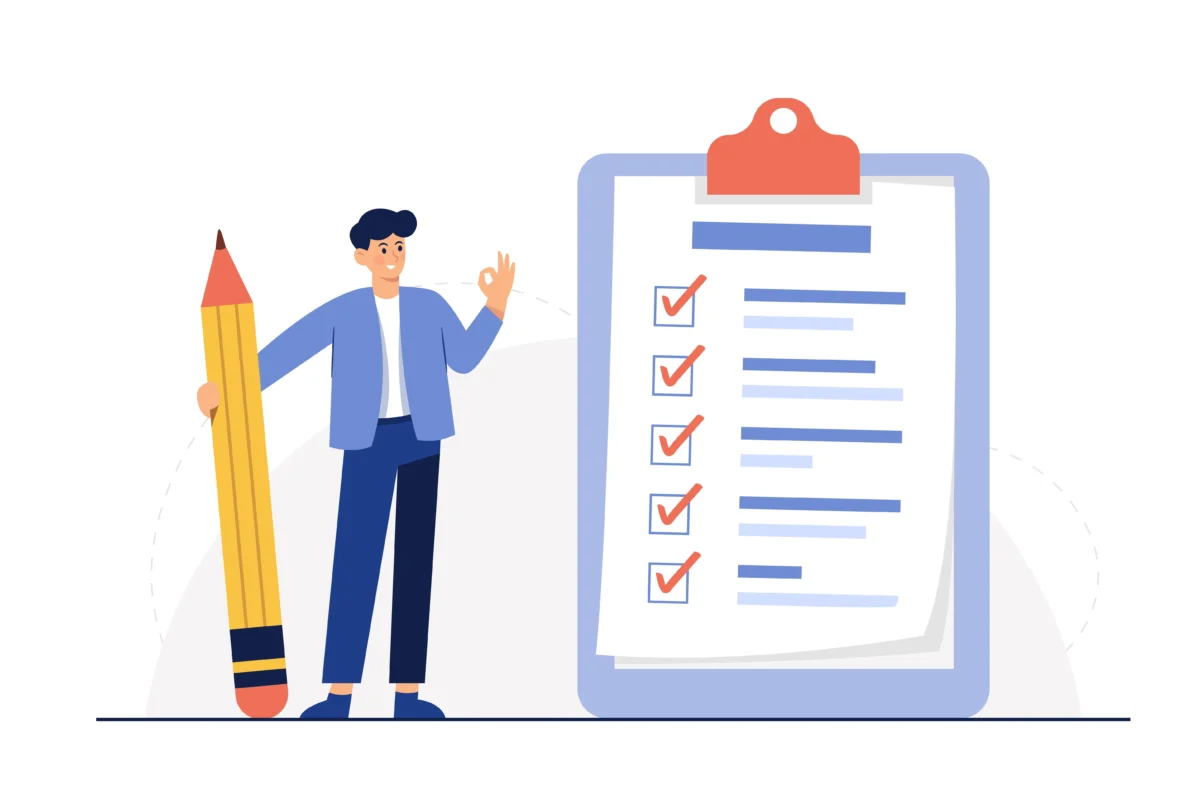
This guide is a practical, step-by-step trademark checklist designed for founders, marketers, and entrepreneurs launching a brand anywhere in the world. Whether you are a startup in India, a small business in the UK, an e-commerce seller in the US, or a global brand operating across multiple jurisdictions, this checklist will help you clear your name thoroughly before you invest a single rupee or dollar in brand-building.
Let us go through everything you need to check and the exact official websites where you can check it.
What Exactly Is a Trademark, and Why Does It Need Checking Before You Launch?
A trademark is any word, name, logo, symbol, slogan, sound, colour, or combination of these elements that identifies the source of a product or service and distinguishes it from competitors. When you register a trademark, you get the exclusive legal right to use that identifier in commerce and the right to stop others from using anything confusingly similar.
Trademark rights arise in two ways. The first is through registration with an official intellectual property office. The second is through actual use in the marketplace, which in many common-law countries like the US, UK, India, Canada, and Australia creates what is known as common law trademark rights. This is important because a competitor does not have to have a registered trademark to challenge you. If they have been consistently using a mark in business before you, they may have prior rights even without a formal registration.
This is why searching only registered trademarks is not enough. A thorough pre-launch trademark search has to cover registered marks, pending applications, and common law or unregistered marks in active use.
What Are the Risks of Skipping a Trademark Check Before Launching?
Before diving into the checklist, it is worth understanding what is actually at stake if you skip this step.
The most immediate risk is receiving a cease and desist notice from another brand. If your name is too similar to an existing registered trademark in the same industry, the rights holder can demand you stop using it immediately. Refusing to comply could mean an injunction from a court, which legally prevents you from using the name at all while the case is pending. If you lose, the financial consequences include damages, legal fees, and a forced rebrand.
Beyond the financial cost, there is the reputational damage. Changing your brand name after launch especially after you have built up a social media following, a customer database, and brand recognition sends a confusing signal to your audience and erodes trust.
There is also the problem of wasted trademark applications. If you file for trademark registration without conducting a proper clearance search and there is already a conflicting mark, your application will be opposed or rejected. You lose your filing fee and your time, and you have to start the entire process over.
The solution is straightforward. Do the clearance work before you launch. This checklist will show you exactly how.
The Trademark Checklist: 12 Steps to Check Your Brand Name Before You Launch
Step 1: Is Your Name Distinctive Enough to Be Trademarked?
Before you search whether your name is available, ask whether it is the kind of name that can even be protected as a trademark.
Generic names that directly describe what a product is (like “Bread” for a bakery) cannot be trademarked because they belong to the public vocabulary. Descriptive names (like “Fresh” for a juice brand) are very difficult to protect unless you can demonstrate years of acquired distinctiveness. Suggestive names that hint at a quality without directly describing it (like “Netflix” suggesting internet and film) are moderately strong. Arbitrary names that use real words with no natural connection to the product (like “Apple” for computers) are strong. Fanciful or invented names that have no dictionary meaning at all (like “Kodak” or “Xerox”) are the most powerful trademark candidates.
The more distinctive your name is, the better your chances of registration and the easier it is to enforce your rights against infringers. Before investing in clearance searches, evaluate where your proposed name sits on this spectrum.
Step 2: Run a Basic Knock-Out Search on Google and the Web
The first and most accessible step is a simple internet search. Search your proposed brand name, its variations, phonetic equivalents, and potential misspellings on Google. Pay attention to businesses operating in your industry or in adjacent industries. Look through the first five pages of results, not just the first. Check image search results for similar logos.
This is called a knock-out search because its purpose is to quickly knock out the most obviously conflicting names before you invest time in formal database searches. If a competitor with significant market presence is already operating under the same or a very similar name in your industry, you know immediately that you need to reconsider your brand name.
Do not stop at Google. Search the proposed name on LinkedIn, Instagram, Facebook, X (formerly Twitter), and YouTube. Check whether the domain is registered by searching on a WHOIS lookup tool. A brand that has an active website, professional social media presence, and a registered domain is likely already established in the market, regardless of whether it is formally registered as a trademark.
Step 3: Search Official Trademark Databases by Country
This is the core of the trademark clearance process. You need to search the official intellectual property office trademark databases for every country where you intend to operate, sell, or distribute your product.
Below are the official trademark search portals for the world’s major markets:
United States — USPTO TESS / TSDR The United States Patent and Trademark Office maintains the Trademark Electronic Search System (TESS) and the newer Trademark Status and Document Retrieval (TSDR) system. You can access the federal trademark search at: https://www.uspto.gov/trademarks/search Search both exact matches and phonetic variations. The USPTO evaluates marks based on “likelihood of confusion,” which means marks do not have to be identical to conflict — they just have to be similar enough that consumers might confuse the two.
United Kingdom — IPO Trade Mark Search The UK Intellectual Property Office (IPO) offers a free trademark search at: https://www.gov.uk/search-for-trademark Post-Brexit, the UK maintains its own trademark registry separate from the European Union. If you operate in both the UK and EU, you need to search both registries separately.
European Union — EUIPO eSearch Plus The European Union Intellectual Property Office (EUIPO) covers all 27 EU member states with a single registration. Their search tool is available at: https://euipo.europa.eu/eSearch/ A single EU trademark (EUTM) covers the entire European Union, which is cost-efficient for businesses targeting the European market broadly.
India — IP India Trademark Search The Controller General of Patents, Designs and Trade Marks (CGPDTM) maintains the official Indian trademark registry. You can search the database at: https://ipindiaonline.gov.in/tmrpublicsearch/frmmain.aspx India uses the Nice Classification system for goods and services. The trademark registry in India is divided into offices in Mumbai, Delhi, Kolkata, Chennai, and Ahmedabad. Class 35 (retail and advertising services) and Class 42 (technology services) are among the most contested categories.
Australia — IP Australia Trade Mark Search IP Australia is the country’s official IP office. Their trademark search tool (ATMOSS — Australian Trade Marks Online Search System) is accessible at: https://www.ipaustralia.gov.au/tools-and-research/ip-search Australia uses the Nice Classification system. A registered trademark in Australia gives you rights across all Australian territories.
Canada — CIPO Trademark Database The Canadian Intellectual Property Office (CIPO) offers trademark searching at: https://ised-isde.canada.ca/site/canadian-intellectual-property-office/en/trademarks Canada amended its trademark law significantly with the adoption of the Nice Classification system in 2019 and now allows multi-class applications. Canada also ratified the Madrid Protocol, enabling international trademark applications through WIPO to extend to Canada.
World — WIPO Global Brand Database If your brand is intended for global reach, the World Intellectual Property Organization (WIPO) offers the Global Brand Database, which consolidates trademark data from multiple countries and international registrations under the Madrid System: https://www.wipo.int/branddb/en/ The Madrid System allows a single international trademark application to extend to over 130 countries, managed through WIPO. This is the most efficient route for businesses seeking multi-country protection.
European Union (Additional Reference) — TMview TMview is a free online tool jointly developed by EU trademark offices that aggregates trademark records from participating IP offices worldwide: https://www.tmdn.org/tmview/ It is not an official registry but an excellent aggregator tool for cross-country searches.
Step 4: Search for Phonetically Similar Names, Spelling Variations, and Translations
Trademark law does not only protect identical marks — it protects marks that are confusingly similar. A name that sounds like yours when spoken aloud, or that is a common alternative spelling of yours, can create a legal conflict even if the two names look different on paper.
When searching trademark databases, do not search only the exact spelling of your proposed name. Run separate searches for:
- Phonetic equivalents (a name that sounds like yours when spoken: “Coke” and “Koke,” for example)
- Common misspellings or intentional typos
- Abbreviations or shortened forms of your name
- Plurals or different grammatical forms
- Foreign language translations or transliterations, particularly if you plan to operate in multilingual markets or if your name is derived from a foreign word
This last point is especially important for global brands. If your proposed name translates to something that is already a well-known trademark or brand in another language, you may face challenges in markets where that language is spoken. A professional trademark attorney uses comprehensive search tools to systematically run these variations but even a manual search across the above permutations gives you significantly better coverage than a single exact-match search.
Step 5: Check the Relevant Trademark Classes (Nice Classification)
Trademarks are registered for specific categories of goods and services, organized under the Nice Classification system, which has 45 classes — Classes 1 through 34 cover goods, and Classes 35 through 45 cover services. This matters because a conflict typically arises when two marks are similar and they cover similar or related goods or services.
If a brand named “Orion” is registered in Class 9 (electronics) and you want to register “Orion” for Class 25 (clothing), there may not be a direct conflict — but this is not always straightforward. The USPTO, UKIPO, and IP India all consider whether goods or services are related in a commercial sense, not just whether they fall in the same Nice Class. Confusion can arise across classes if a consumer might reasonably assume both businesses share a common source.
Before you search, identify all the Nice Classes relevant to your business, including classes you might enter in the future as your business grows. Searching too narrow a class range gives you false assurance. When in doubt, search adjacent classes as well.
Step 6: Check for Pending Trademark Applications, Not Just Registered Marks
Many business owners search only for registered trademarks and consider themselves safe. This is a mistake. A trademark application that is pending — filed but not yet registered — still gives the applicant priority rights from the date of filing. If someone filed an application for a name similar to yours three months ago, they have seniority even though their mark is not yet officially registered.
All major trademark office databases allow you to filter searches to include pending or published-for-opposition applications alongside registered marks. Make sure you are not filtering these out. On the USPTO database, for example, ensure you search across both live and pending marks, not just registered ones.
Step 7: Check State-Level and Provincial Trademark Registers
In the United States, trademark protection exists at both federal and state levels. A trademark registered at the state level with a state Secretary of State does not appear in the USPTO federal database but still gives the owner rights within that state. If you plan to operate only within one or two states initially, a state-level registrant with prior use may have superior rights to yours in those territories.
Similarly, in Canada, provincial business name registrations can sometimes create conflicting rights at a local level. In Australia, business names registered with ASIC at the state level can occasionally create confusion issues, even though they are not formal trademark registrations.
A full clearance search should include state or provincial registers in addition to national trademark databases for any territory where you plan to operate.
Step 8: Search Common Law Trademark Uses — Businesses Operating Without Registration
In the United States, United Kingdom, India, Canada, and Australia, trademark rights can arise from actual use in commerce — even without formal registration. This is known as common law trademark protection, and it is enforceable in courts.
A business that has been trading under a name for several years, consistently using it on products, invoices, advertising, and in the marketplace, may have common law trademark rights that pre-date your proposed registration. If they discover your brand operating under a similar name, they can potentially challenge your use even though they are not registered.
To check for common law uses, you need to go beyond trademark databases. Search industry directories, trade publications, Companies House (UK), the Companies Register (India’s MCA21 portal), ASIC (Australia), Corporations Canada, and the relevant Secretary of State databases in the US. Search LinkedIn, Crunchbase, and industry-specific directories. Look for businesses in your sector using a similar name even if they do not have a website or active social media presence.
Step 9: Check Domain Names and Social Media Handles
While domain name registration and social media handle availability are not trademark registrations, they are important indicators of prior commercial use. A business that has been operating under a name and has a domain registered years before your launch has evidence of prior use — even if they are not formally registered.
Run the proposed name through:
- WHOIS lookup tools (such as https://www.whois.com) to check domain registration history, including when the domain was first registered and whether it is actively used
- Namechk.com or similar tools that check username availability across dozens of social media platforms simultaneously
If the domain and all relevant social media handles are taken by an active business in your industry, treat this as a significant conflict signal even if the formal trademark database search comes back clear.
Step 10: Evaluate the Risk — Not Just the Conflict
Finding a similar mark in a trademark database does not automatically mean your proposed name is unusable. The analysis is more nuanced than that. You need to evaluate several factors to assess the actual risk level.
First, consider similarity. How similar is the conflicting mark to yours — visually, phonetically, and conceptually? Identical names in the same class are clear conflicts. Names that sound similar but look different, or that share only one word of a multi-word mark, may present manageable risk.
Second, consider the relatedness of goods and services. A “Sunrise” trademark registered for hotel services and a “Sunrise” trademark you want for food products may or may not conflict, depending on whether a court would consider consumers likely to be confused about the source.
Third, consider the strength of the conflicting mark. Highly distinctive, well-known marks with active enforcement records are more dangerous to be near than weak, descriptive marks that the owner has done little to protect.
Fourth, consider the commercial footprint of the conflicting owner. A local business operating in a single city with a small customer base poses lower risk than a national or international brand.
This risk evaluation is where professional legal advice becomes genuinely valuable. An experienced trademark attorney can assess the relative weight of each of these factors and give you a realistic assessment of whether proceeding with your name is commercially viable.
Step 11: Conduct a Logo and Device Mark Search
Many businesses focus their trademark searches entirely on word marks and forget that logos and visual identifiers are also trademarked. If your logo, icon, or stylized typography resembles an existing registered design mark, you have a potential infringement issue even if your brand name is entirely different.
Logo searches are more complex than word searches because they require searching visual similarity rather than textual similarity. The EUIPO offers a visual similarity search tool. WIPO’s Global Brand Database also supports image-based searches. The USPTO uses the Design Search Code Manual to classify design elements, allowing for stylized or figurative mark searches.
Have your logo designer conduct this search before finalizing any brand identity design. Discovering a conflict in your logo after commissioning full brand identity design, business cards, packaging, and signage is costly and demoralizing.
Step 12: Consider International Protection Early — Especially the Madrid System
If your business has any international ambitions — and in the era of e-commerce, most businesses do — you need to think about trademark protection beyond your home country from the beginning, not as an afterthought.
The Madrid System, administered by WIPO, allows you to file a single international trademark application from your home country that can be extended to over 130 member countries. This is far more cost-efficient than filing separate national applications in each country. However, your international application is initially based on your home country application or registration, so getting your domestic filing right is the foundation.
Official IP Office Websites: Your Global Reference Guid
For quick reference, here are the official trademark search portals for each major jurisdiction:
United States: https://www.uspto.gov/trademarks/search
United Kingdom: https://www.gov.uk/search-for-trademark
European Union: https://euipo.europa.eu/eSearch/
India: https://ipindiaonline.gov.in/tmrpublicsearch/frmmain.aspx
Australia: https://www.ipaustralia.gov.au/tools-and-research/ip-search
Canada: https://ised-isde.canada.ca/site/canadian-intellectual-property-office/en/trademarks
New Zealand: https://www.iponz.govt.nz/
Singapore: https://trademarks.ipos.gov.sg/
Germany: https://www.dpma.de/english/index.html
China: https://wcjs.sbj.cnipa.gov.cn/
Japan: https://j-platpat.inpit.go.jp/
WIPO Global Brand Database (International/Madrid System): https://www.wipo.int/branddb/en/
TMview (Multi-Country Aggregator): https://www.tmdn.org/tmview/
Common Mistakes Businesses Make Before Launching a Brand Name
Many businesses conduct some level of trademark checking before launch but still end up with legal problems because of how they approach the process. Here are the most frequent errors and how to avoid them.
The first mistake is relying on a company registration or business name registration as proof of trademark availability. Registering a business name with Companies House, the Registrar of Companies, or a Secretary of State is a corporate formality — it does not give you trademark rights and does not mean no one else owns that name as a trademark.
The second mistake is searching only for identical names. Trademark law is built around the concept of confusing similarity, not just identical copying. Searching for your exact name and finding nothing does not mean you are clear. You need to search for names that look like yours, sound like yours, or mean the same thing as yours.
The third mistake is searching in only one country. E-commerce means your brand can reach customers globally without you actively targeting them. If a consumer in another country can purchase from your website, you have a commercial presence there, and trademark rights in that country may apply.
The fourth mistake is not searching pending applications. As explained in the checklist, a pending application confers priority rights. Many businesses search only registered marks and miss conflicting pending applications entirely.
The fifth mistake is leaving the logo unsearched. Your brand identity is more than words. A confusingly similar logo to an existing registered design mark is a liability regardless of how different your brand name is.
The sixth mistake is delaying. Many brands choose their name, invest heavily in brand identity and marketing, and only search for trademarks when they are weeks from launch. The right time to search is before any significant investment in the brand identity — ideally before you even finalise the shortlist of potential names.
What Happens If You Find a Conflict? What Are Your Options?
Finding a conflicting trademark is not the end of the road. You have several options depending on the nature and seriousness of the conflict.
The first and most sensible option, especially for early-stage brands, is to modify the name. If there is a clear conflicting registration in your core market, changing your name at the planning stage costs nothing except time and creativity. This is always preferable to fighting a legal battle after you have invested in brand identity.
The second option is to seek a coexistence agreement with the existing rights holder. If your proposed use is genuinely different from theirs in terms of geography, industry, or customer base, many trademark owners are willing to enter into written coexistence agreements that allow both brands to operate without confusion. These agreements should always be drafted by a lawyer.
The third option, in some circumstances, is to challenge the validity of the conflicting registration. If the existing trademark has not been used in commerce for several years, many jurisdictions allow you to challenge it for non-use or abandonment. In the US, a trademark can be challenged for abandonment after three years of non-use. In the UK and EU, five years of non-use makes a mark vulnerable to cancellation. In India, the threshold is five years as well.
The fourth option is to proceed with legal counsel’s guidance in cases where the risk is assessed as manageable. If the conflicting mark is in a completely different industry, has very little commercial presence, or covers only a small geographic territory, your attorney may advise that the risk of conflict is low enough to proceed.
Whatever option you pursue, the key is to make an informed decision based on proper legal analysis rather than wishful thinking.
Frequently Asked Questions
Is a trademark search legally required before launching a brand?
No, a trademark search is not a legal requirement in any jurisdiction. However, skipping it is one of the most commercially reckless decisions a founder can make. Without a clearance search, you have no way of knowing whether your brand name infringes on existing rights. The financial and reputational consequences of launching with an infringing name — forced rebrand, litigation, cease and desist orders — far outweigh the time and cost of conducting a thorough search before launch.
Can I rely on a free Google search to check if a trademark is available?
A Google search is a useful starting point for obvious conflicts, but it is not a substitute for a formal trademark search. Google indexes publicly visible websites but does not capture the full record of registered trademarks, pending applications, or common law uses by businesses without a significant online presence. Official trademark database searches, such as the USPTO TESS, EUIPO eSearch Plus, or IP India Trademark Search, are the necessary next step after your initial internet search.
Does having a registered company name or domain name protect my brand as a trademark?
No. Registering a company name with the corporate registrar (like Companies House in the UK, ASIC in Australia, or the Registrar of Companies in India) is a separate legal formality from trademark registration. It does not grant you trademark rights. Similarly, owning a domain name does not constitute a trademark. Trademark protection requires either formal registration with the IP office or sustained commercial use in the marketplace.
If I find a similar trademark in a country I am not operating in, do I need to worry?
This depends on your business model. If you sell exclusively to customers in one country and have no online presence accessible to customers elsewhere, conflicts in foreign jurisdictions may not be immediately relevant. However, if you operate an e-commerce store, export products, or plan to expand internationally, you should treat foreign conflicting marks seriously. Courts in many countries can take jurisdiction over online infringement even when the infringing party is based overseas.
What is the difference between a trademark and a copyright, and do I need to check both before launching?
A trademark identifies the source of goods or services — it is your brand name, logo, or slogan. Copyright protects original creative works — written content, images, music, software, and design. They are separate forms of intellectual property. Before launching a brand, you should check both. Your brand name and logo should be cleared for trademark conflicts. Your creative assets — website content, marketing copy, product photography — should be original and not copied from existing copyrighted works. Using stock images purchased under appropriate licences, commissioning original creative work, and ensuring website text is entirely original are all part of a comprehensive pre-launch IP review.
How long does a formal trademark registration take?
Timelines vary by country. In the United States, a straightforward application without opposition typically takes eight to twelve months from filing to registration. In the UK and EU, the process can be completed in four to six months in uncontested cases. In India, trademark registration has historically taken longer but has been improving, with accelerated examination available for an additional fee. In Australia, registration in uncomplicated cases can be achieved in seven to nine months. These timelines assume no opposition is filed. If a third party opposes your application, the process can extend by several years. This is why applying as early as possible — before or at the time of launch — is strategically important.
Can I use a trademark symbol (™) before my trademark is registered?
Yes. The ™ symbol can be used by anyone to indicate that they are claiming a word or logo as their trademark, regardless of whether it is registered. You do not need registration to use ™. However, the ® symbol, which indicates a federally or officially registered trademark, can only be used once your trademark has been formally registered by the relevant IP office. Using ® before registration is a legal violation in most countries.
What is the Madrid System and is it better than filing separately in each country?
The Madrid System, administered by WIPO, allows you to file a single international trademark application through your home IP office that can be extended to over 130 member countries. It is significantly more cost-efficient than filing individual national applications in each country. However, the international application is built on your home country application or registration, and if your base application fails within the first five years, all linked international designations may also fail. Whether the Madrid System is preferable to direct national filings depends on your budget, your target markets, and the strength of your home country application. A trademark attorney can advise on the best strategy for your specific situation.
The Right Time to Do Your Trademark Homework Was Yesterday. The Second Best Time Is Now.
A brand is not just a name. It is a legal asset. Every time a customer sees your name on a product, reads it on a receipt, or searches for it online, that is brand equity accumulating. Protecting that equity before you build it is far easier — and far cheaper — than trying to protect or recover it after an infringement dispute.
The twelve-step trademark checklist in this guide gives you a systematic approach to clearing your brand name before launch. Start with the basics — check distinctiveness, run a knock-out search online, search the official trademark databases for your key markets, look for phonetic variations, check pending applications, and evaluate common law uses. Then layer in logo searches, international considerations, and a proper risk assessment with professional legal guidance.
Use the official IP office resources listed in this guide — the USPTO, UKIPO, EUIPO, IP India, IP Australia, CIPO, WIPO, and the others — to build a picture of the trademark landscape your brand is entering. These are public resources, they are free to search, and they represent the authoritative legal record of what has already been claimed.
If you find conflicts, address them early. Modify your name, seek coexistence, challenge weak marks with legal support, or get a professional opinion on the level of risk. What you should never do is ignore the search or assume that checking a domain name is enough.
Your brand deserves the right foundation. A thorough trademark clearance by My Legal Pal before launch is that foundation. Do the work now, file your application early, and build your brand with the confidence that comes from knowing your name is legally yours.
Related guides
- How to choose a protectable brand name — the strategy behind a defensible name.
- How to register your trademark in India — the registration process, step by step.
This article is for informational purposes only and does not constitute legal advice. For trademark clearance and registration specific to your business and jurisdiction, consult a qualified intellectual property attorney or trademark agent.