Last updated on August 12th, 2026 at 10:36 pm
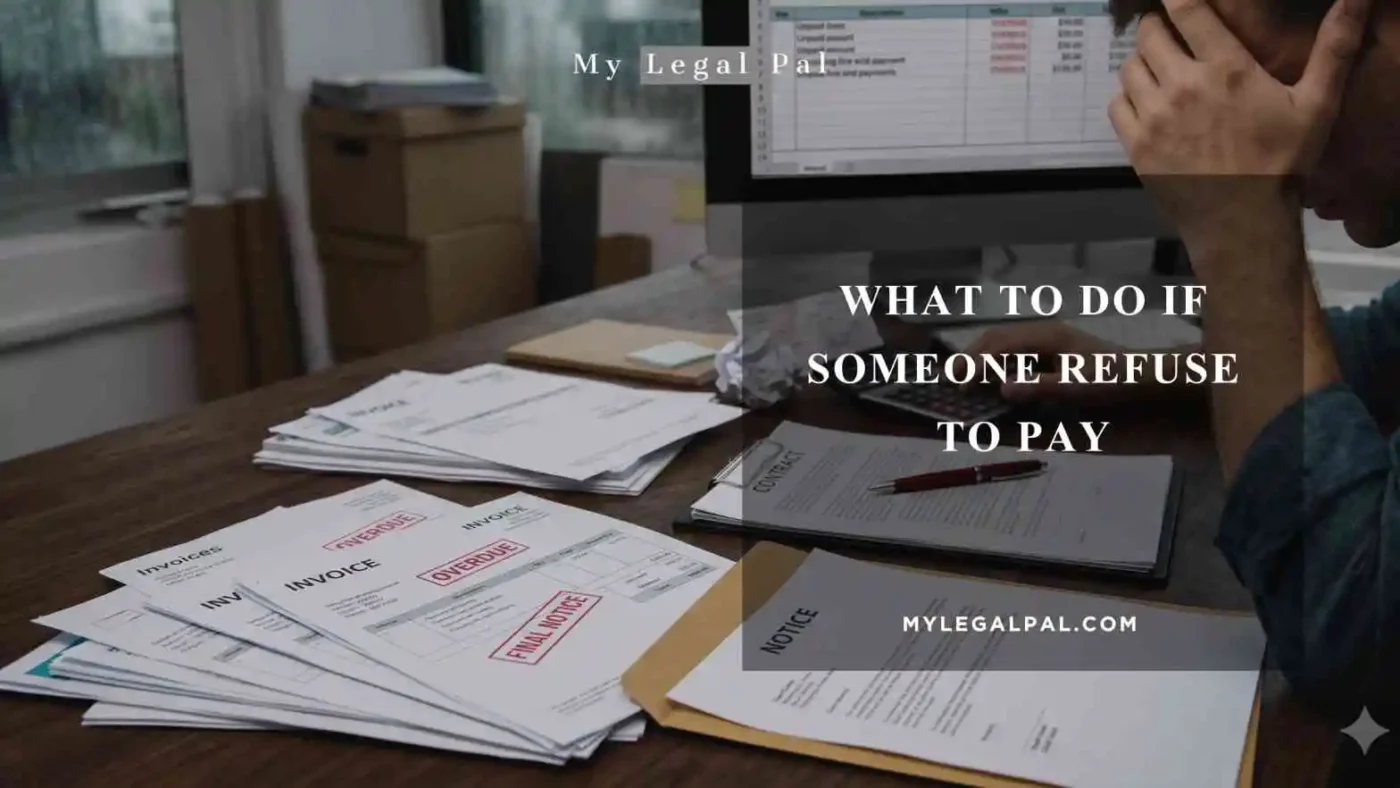
You did the work. You delivered everything you promised. You sent the invoice. And now the client has gone quiet, or worse, they have come back with a reason why they are not going to pay.
This situation happens to freelancers, consultants, agencies, contractors, and small businesses every single day. It is one of the most frustrating things that can happen in a commercial relationship, and if you have not been through it before, the uncertainty about what to do next can be genuinely stressful.
The good news is that a signed contract puts you in a strong legal position. The better news is that most non-payment situations resolve before they ever reach a courtroom, because the other party realises, often quite quickly, that they are on the wrong side of the law.
Quick overview: This guide covers the specific step-by-step response for a non-payment scenario, including real, currently available recovery routes in India that don’t require filing a case. For a broader response playbook covering any type of contract breach, not just non-payment, our guide on what to do if someone breaches a contract covers that ground. And if you’re past the immediate response and need to know how to actually collect after a court judgment, including execution and insolvency proceedings, our companion guide on what to do when a client stops paying, including how to actually get the money covers that in full.
Why non-payment happens even when a contract was signed
Before getting into what to do, it is worth understanding what is usually going on when a client refuses to pay.
Some refusals are genuine disputes. The client believes the work was not delivered to the standard agreed, or that the scope changed in a way that was not properly documented, or that the deliverables do not match what they expected. These situations require a different approach than a client who simply does not want to pay.
Some refusals are cash flow problems that the client does not want to admit to. They do not have the money right now and they are hoping you will go away or accept less.
Some refusals are opportunistic. A small number of clients deliberately engage services with no intention of paying, particularly targeting freelancers and small businesses who they believe will not pursue legal action because of the cost and effort involved.
And some are genuine misunderstandings about what was agreed, where both parties have different memories of conversations that were never properly documented.
Understanding which of these you are dealing with matters because it shapes how you respond. A cash-strapped client who genuinely wants to pay but cannot right now is handled differently than a client who is disputing the quality of work, who is handled differently again from someone who simply never intended to pay.
Step one: stay calm and document everything
The first thing you should do when you realise a client is not going to pay without a fight is stop and document everything you have.
Pull together every piece of written evidence related to the contract and the work: the signed contract or agreement, every email exchange related to the scope, approvals, and deliverables, invoices and any receipts, evidence of delivery such as sent files, completion notifications, or platform records, any messages where the client acknowledged receiving the work or expressed satisfaction, and records of any subsequent communication about payment.
The more evidence you have that clearly shows what was agreed, what was delivered, and what the payment terms were, the stronger your position in any subsequent demand or legal action.
Do not delete any messages, even ones where the relationship became difficult. Courts and mediators look at the full picture.
Step two: make direct contact before escalating
Before sending a formal demand letter or taking any legal step, try one direct, calm communication.
Call or email the client and ask straightforwardly when you can expect payment. Keep it professional and factual. Do not be aggressive or threatening at this stage. Some non-payment situations resolve here because the invoice genuinely slipped through, the payment was delayed by an internal process, or the client needed a reminder.
If the client gives you a specific date for payment and then misses it, that now becomes part of your documented record. If they come back with a dispute about the work, ask them to put their concerns in writing. This is important because you need to understand what they are actually claiming before you can respond to it.
If you get no response at all, move to the next step.
Step three: send a formal demand letter
A demand letter is a written notice to the client that formally states the amount owed, the basis for the debt, the deadline for payment, and the consequences of non-payment.
A good demand letter includes: the exact amount owed with a clear breakdown, reference to the specific contract and the obligations it created, a firm but professional deadline for payment, and a clear statement of what happens next if payment is not received, whether that is legal action, referral to a debt collection process, or another specific consequence. Our complete guide to legal notices for non-payment of dues covers exactly how to draft one that carries real weight.
The demand letter often resolves the situation on its own, particularly against a client who was hoping you would simply give up rather than escalate. A properly drafted notice, on letterhead, referencing specific legal provisions, signals that you are prepared to actually follow through. Our guide on why a legal notice is your secret weapon before filing a lawsuit covers the mechanics of exactly why this works.
Step four: consider mediation before litigation
If the client responds to your demand letter with a dispute rather than payment, mediation is worth considering before you file a court claim.
Mediation is a structured process where both parties meet with a neutral third party who helps them reach a settlement. It is significantly cheaper than litigation, it is confidential, and it resolves disputes faster than court proceedings in most jurisdictions.
Mediation is particularly useful where there is a genuine disagreement about the quality or scope of the work delivered, where the relationship has some value that both parties would prefer to preserve, or where both parties want a resolution but cannot agree on terms through direct negotiation.
If mediation produces a settlement agreement, that agreement is itself a binding contract. If the client does not comply with the settlement terms, you are back in court but now with a cleaner and more straightforward case.
India: recovering payment without filing a case at all
Before jumping to formal litigation, it’s worth knowing that India has real, government-run recovery mechanisms specifically for this scenario, and they often go further than a generic demand letter alone.
If you’re a Micro or Small Enterprise, the MSME Samadhaan route is genuinely powerful. Under the MSMED Act, 2006, a buyer must pay within 45 days of accepting goods or services (or 15 days with no written agreement), and once that window passes, interest accrues at three times the RBI’s notified bank rate, compounded monthly, not a token penalty. You can file a delayed-payment complaint directly, free of charge, through the MSME ODR portal or Samadhaan, without needing a lawyer, and the state Facilitation Council must dispose of the case within 90 days, with an award carrying the same legal weight as a civil court decree.
If the payment was covered by a cheque that bounced, you have a separate, faster route. Under Section 138 of the Negotiable Instruments Act, a dishonoured cheque creates a criminal remedy, not just a civil one, and it can run in parallel with an MSME claim for combined pressure. Our complete guide to recovering money through a legal notice without filing a case covers both of these mechanisms, the exact deadlines, and how to combine them, in full depth, and our guide on legal notices for cheque bounce covers that specific process.
Step five: take legal action
If direct contact, a demand letter, and mediation have not produced payment, legal action is your remaining option.
Arbitration. Many commercial contracts contain arbitration clauses requiring disputes to be resolved through private arbitration instead of court proceedings. If your agreement includes an arbitration provision, you may be contractually required to follow that process before filing a lawsuit. Unlike court litigation, arbitration is usually private and handled by one or more arbitrators rather than a judge. The procedure is generally faster and more flexible than civil court proceedings, though costs can still become significant depending on the institution, jurisdiction, and complexity of the dispute. Our guide on arbitration versus litigation in cross-border contracts covers this trade-off in depth.
Small claims court. For smaller amounts, small claims court is designed to be accessible to individuals and businesses without requiring legal representation. The monetary limit varies by jurisdiction. In the US, it ranges from $2,500 in some states to $25,000 in others. In the UK, the small claims track covers claims up to £10,000. In India, consumer courts handle cases involving consumers with specific monetary limits by forum tier. Filing in small claims court is relatively straightforward and inexpensive. You file the claim, pay a modest filing fee, and attend a hearing where both sides present their case to a judge. A signed contract, copies of invoices, and evidence of delivery significantly improve your position in a small claims hearing.
Civil court. For larger amounts, you need to file a civil claim in the appropriate court for the contract value. This process typically requires legal representation and takes longer than small claims, but courts can award the full amount owed, interest, and in some cases legal costs.
What freelancers and independent contractors should know
Freelancers and independent contractors are disproportionately affected by non-payment because they often work without the kind of contract infrastructure that larger businesses have in place, and because clients sometimes calculate that a solo freelancer is less likely to pursue them than a business with legal resources.
That calculation is increasingly wrong. Most jurisdictions have mechanisms that make it genuinely practical for freelancers to pursue unpaid payments. New York City’s Freelance Isn’t Free Act, enacted in 2017, requires written contracts for freelance engagements above $800 and allows freelancers to sue for double damages plus attorney’s fees if a client refuses to pay under a written contract. Illinois and California have passed similar legislation. The trend at state and federal level is toward stronger protections for freelance workers.
Freelance-specific platforms including Upwork, Fiverr, and Toptal have escrow and dispute resolution mechanisms that protect against non-payment where work is conducted through the platform. Where work is done off-platform, those protections do not apply.
For freelancers without formal legal infrastructure, the most practical protective measures are a written contract for every engagement, however small, upfront deposits for new clients (typically 25 to 50 percent of the total fee before work begins), milestone-based payment structures for larger projects so you are not delivering the entire project before receiving any payment, and clear payment terms specifying the payment due date, late payment interest, and the consequences of non-payment. Our guide on work for hire versus independent contractor agreements covers structuring the underlying engagement itself.
What constitutes a breach of contract for non-payment
When a client signed a contract and then refuses to pay, they are in breach of a fundamental obligation, the payment obligation that formed the entire commercial basis of the agreement. Our complete guide to breach of contract covers the legal framework this sits within.
One important nuance: if the client has raised a genuine dispute about the quality or completeness of the work delivered, and that dispute has some merit, a court may reduce the amount you can recover to reflect the legitimate shortfall. This is why clear scope documentation at the start of a project matters so much. Our complete guide to what should be included in every business contract and our guide on the most common contract mistakes that cost businesses money cover exactly how to draft scope and payment terms that prevent this from becoming a genuine ambiguity later.
The one contract clause that prevents most non-payment problems
If you want to reduce the risk of this situation happening again, there is one clause that addresses more non-payment scenarios than any other: a payment terms clause with a late payment interest provision and a clear dispute procedure.
Here is why it works. Most clients who delay payment or refuse to pay initially are hoping you will accept less or go away. A contract that specifies that overdue invoices accrue interest from the due date, at a clearly stated rate, changes the financial calculus. The longer they delay, the more they owe. Many clients who were comfortable sitting on an unpaid invoice become significantly less comfortable when they realise interest is accumulating.
The dispute procedure element is equally important. A clause that requires the client to raise any dispute about the work in writing within a defined period after delivery, and that states that failure to raise a written dispute by that deadline constitutes acceptance of the work, eliminates a large category of after-the-fact quality disputes that are raised only when payment is demanded.
A complete payment protection clause combines: a specific payment due date, a late payment interest rate, a written dispute deadline, and a statement that the client’s right to withhold payment does not extend to amounts not in genuine dispute.
What the law actually says
Courts in the United States, the United Kingdom, India, and most common-law jurisdictions have consistently held that a signed contract creates a binding legal obligation to pay for services properly rendered.
In Hadley v Baxendale (1854), the English Court of Exchequer established the principle that damages for breach of contract cover losses that flow naturally from the breach. This means that if a client’s non-payment caused you additional financial loss beyond the unpaid invoice, for example because you had to borrow to cover operating costs, that consequential loss may be recoverable where it was foreseeable at the time of contracting.
The US Uniform Commercial Code and common law contract principles in every US state provide that a party who has substantially performed their contractual obligations is entitled to the contract price minus any adjustment for any minor deficiency in performance. A client who received work that was substantially delivered as agreed cannot withhold the entire payment on the basis of a minor complaint.
In India, the Indian Contract Act 1872 provides under Section 39 that when one party to a contract refuses to perform their obligations, the other party may treat the contract as repudiated and sue for breach. Section 73 provides for recovery of compensation for any loss caused by the breach.
The consistent message across jurisdictions: a signed contract is an enforceable obligation, and refusing to pay under it without a legitimate legal basis is a breach that courts will remedy.
Frequently asked questions
What should I do if someone refuses to pay after signing a contract?
Document everything first, then attempt direct, calm contact before escalating. If that fails, send a formal demand letter setting out the amount owed and a firm deadline. If the client disputes the claim rather than paying, mediation is often the next practical step before litigation, and in India, the MSME Samadhaan and cheque-bounce routes can offer faster, cheaper recovery than a civil suit where they apply.
What steps should I take if a client suddenly backs out of a signed agreement?
Gather your evidence of the signed contract and any work already performed, then contact the client directly to understand their reason before escalating. If they confirm they are refusing to honour the agreement, a formal demand letter is the appropriate next step, followed by mediation or legal action if the letter does not resolve the situation.
What are the most common excuses clients use for not paying after signing a contract?
The most common patterns are a genuine or manufactured dispute about work quality or scope, an undisclosed cash flow problem the client doesn’t want to admit, opportunistic non-payment from a client who never intended to pay, and genuine misunderstandings about what was actually agreed. Identifying which pattern you’re dealing with shapes the right response.
Do verbal agreements hold the same weight as signed contracts?
Verbal agreements can be legally binding in many jurisdictions, but they are significantly harder to enforce because proving the specific terms becomes a matter of one person’s word against another’s. A written contract, however brief, creates a far stronger evidentiary record and should always be used for any engagement involving meaningful money.
Which clause should I add to my contracts to prevent non-payment?
A payment terms clause combining a specific due date, a clearly stated late payment interest rate, and a written dispute deadline (after which the work is deemed accepted) addresses more non-payment scenarios than any other single provision, by changing the financial incentive to delay and closing off after-the-fact quality disputes raised only once payment is demanded.
What should a freelancer do if they are not paid for their services?
Follow the same document-contact-demand escalation as any other non-payment situation, and check whether local freelancer protection legislation applies, several US states now allow freelancers to sue for double damages plus attorney’s fees under a written contract. Going forward, upfront deposits and milestone-based payment structures meaningfully reduce this risk on future engagements.
What can I do if someone does not pay for services I have already delivered?
The same escalation path applies regardless of whether the work is a product or a service: document the delivery and the agreed payment terms, make direct contact, send a formal demand letter, and consider mediation or legal action if the letter doesn’t resolve it. In India, if you qualify as an MSME or the payment was by cheque, the MSME Samadhaan and Section 138 routes can offer a faster path than a full civil suit.
This article is general information, not legal advice. Recovery mechanisms and remedies for non-payment vary by jurisdiction and depend on the specific facts of your contract. Always consult a qualified lawyer for advice specific to your situation.
Authored and reviewed by Prakhar Rai, Advocate, founder of My Legal Pal, enrolled with the Bar Council of India. Connect on LinkedIn.
If a client is refusing to pay you after signing a contract, our team can help you move fast. We handle demand and cease-and-desist notices and contract drafting to prevent this next time, and you can speak to our contract lawyers in India or the USA about your specific situation.